Climate Change, Displacement and the Human Right to Belong: HBTSR Public Meeting
HBTSR’s public meeting brought together important questions about human rights, climate change, migration and the importance of compassion and community.
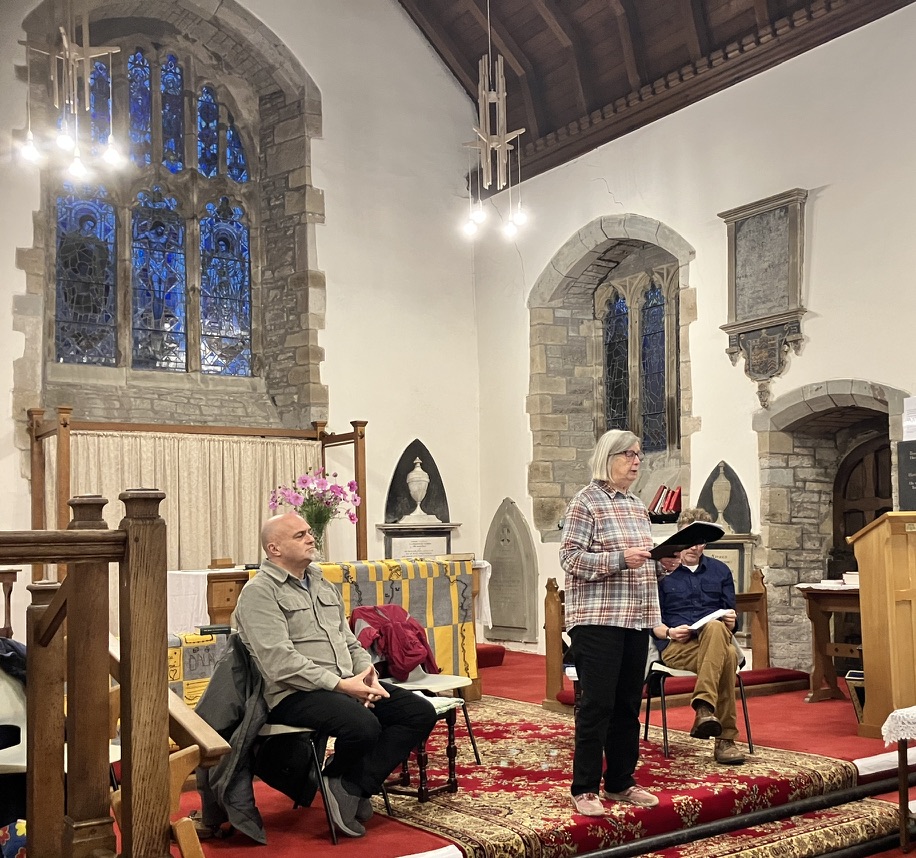
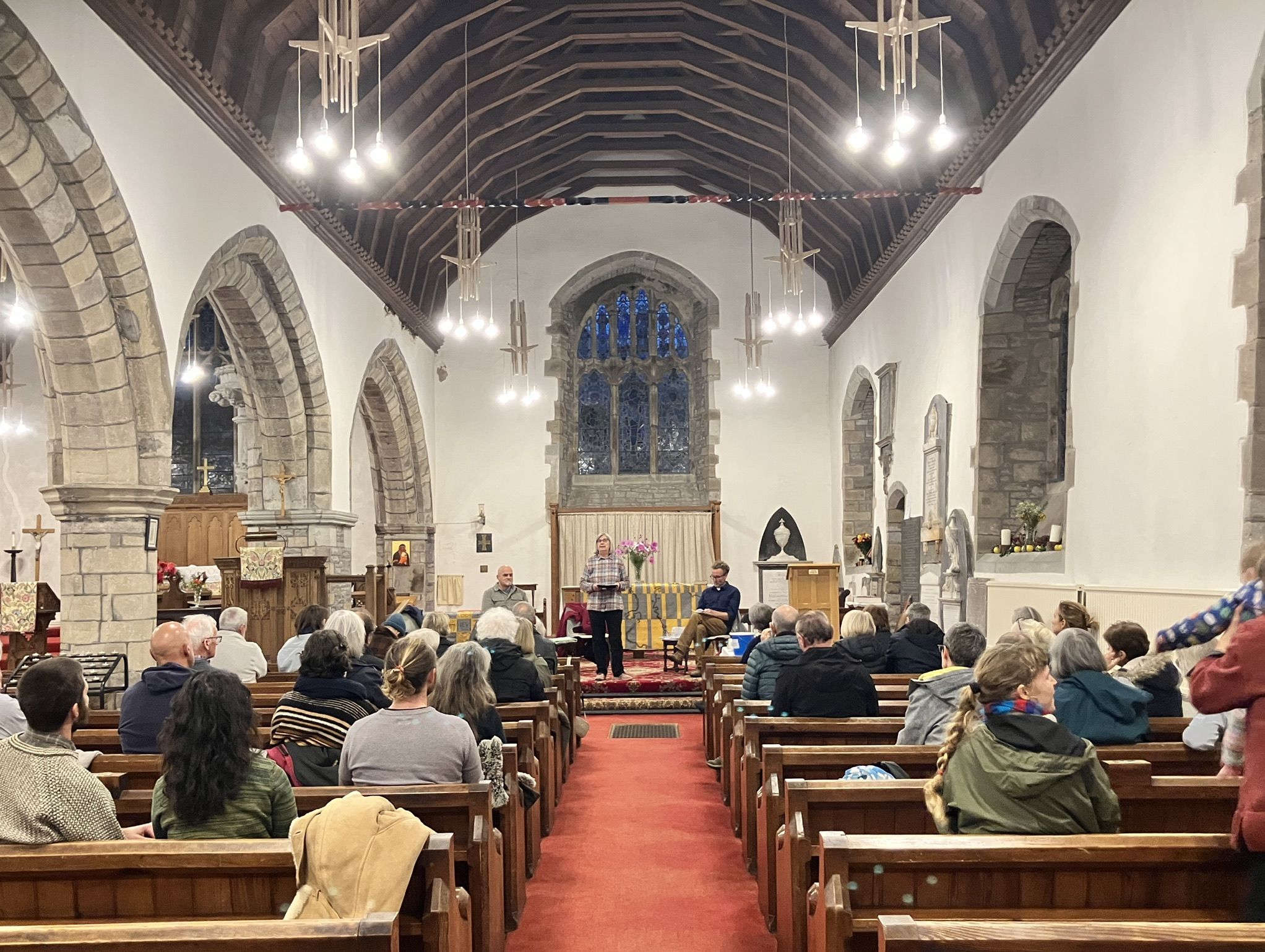
The meeting was chaired by Margaret Blake, Chair of HBTSR, who began with an introduction to the organisation and some of its work over the past year. She then introduced guest speaker Ben Rawlence, highlighting his experience as a human rights observer in Africa, his time in the Dadaab refugee camp in Kenya, and his subsequent work establishing Black Mountains College in Wales.
Ben explored what he described as truths and myths about climate change and migration, challenging common assumptions and encouraging the audience to consider the human stories behind these global issues.
Climate change is not a future threat
Ben emphasised that climate change is already affecting people’s lives, forcing some to leave their homes in search of safety. Drawing on his experiences in Africa, he spoke about people fleeing conflict, hunger and starvation, with drought and environmental pressures adding to the challenges faced by many communities.
Yet climate change is not, in itself, a recognised ground for refugee status under the 1951 Refugee Convention. This raises difficult questions about what happens when drought, flooding or rising sea levels make a person’s home uninhabitable.
Ben highlighted the deep connection between people and place. The Welsh word cynefin expresses something of the environment in which we belong, shaping our identity, culture and relationships. When people lose the land and surroundings that have sustained them, they can lose much more than a home or livelihood.
As climate pressures intensify, the need to consider how people displaced by environmental change can find safety and protection will become increasingly urgent.
Challenging the myths about migration
Ben challenged the idea that migration is an uncontrollable wave of people, as well as the misconception that most immigration takes place illegally.
People have a right to seek asylum, although not every claim will be successful. It is essential that claims are considered fairly and promptly, and that decisions are made in accordance with the law.
He also highlighted the importance of recognising legal migration through work and study visas, and the contribution that international students and overseas workers make to universities, local economies and the workforce.
Beneath the political debate lies a deeper question: how do we respond to people whose lives have been disrupted, and what does that response say about the kind of society we want to be?
Mark Seymour: Building a community of welcome in Newport
The meeting also heard from Mark Seymour, Project Lead at Newport Sanctuary, who described how a small act of friendship grew into a community initiative supporting asylum seekers and refugees.
Beginning in 2005, friendships formed with Eritrean asylum seekers in Newport developed into a women’s group and, eventually, a wider project offering advice, advocacy, wellbeing support and opportunities for social connection.
Activities include football, games, women’s groups and shared refreshments, helping people overcome isolation and build relationships. A bicycle-repair initiative provides affordable transport and a useful service to the wider community, demonstrating how practical activities can bring people together. Mark mentioned how HBTSR had helped to set this up and continue to deliver bikes [ Thanks Vanessa and Drovers Cycles] Mark also mentioned how the partnership with HBTSR had allowed them to upgrade the games room which is used daily after college and helps the many[ over 80] unaccompanied asylum seeking teenagers in Newport to have some enjoyment together.
Mark highlighted the difficulties many people face even after receiving refugee status. Finding accommodation, learning English, accessing employment and rebuilding a support network can be daunting, particularly for those who have experienced repeated moves and prolonged uncertainty.
Newport Sanctuary helps people navigate these challenges and move towards greater stability and independence. Mark’s account showed that successful integration involves much more than paperwork: it depends on friendship, practical help and a community willing to welcome newcomers. Newport also have 2 apartments where people can stay for a year after achieving refugee status to navigate this taime of change. HBTSR were involved in helping to refurbish them.
Prejudice, belonging and the importance of empathy
The meeting considered how political debate, Brexit and changing immigration policies have affected public attitudes towards migrants and refugees. Concerns were raised about prejudice and the tendency to portray newcomers as competitors for jobs, housing and public services.
Against this backdrop, the experiences shared from Newport offered a positive example of how local communities can make a difference. A friendship, help with learning English, a shared activity or simply a welcoming place to meet can turn an unfamiliar issue into a human relationship.
The discussion also highlighted the emotional cost of displacement. People may lose their homes, family networks, familiar surroundings and sense of identity. Rebuilding a life requires not only safety and accommodation but also time, understanding and opportunities to become part of a community.
Black Mountains College: Education for a sustainable future
Ben’s work at Black Mountains College brings together many of the themes explored during the evening.
Based in and around Bannau Brycheiniog National Park in Wales, the college aims to create a future in which both nature and people can thrive. Its central challenge is how to build a fair and just society within the safe limits of our planet.
The college believes education has a vital role to play in addressing the climate and ecological crisis. Its approach encourages the practical skills, creativity and systems thinking needed to build resilience and develop more sustainable ways of living.
Ben’s journey from human rights observation and humanitarian work to establishing an innovative educational institution reflects the close connections between environmental sustainability, social justice and human dignity.
A shared responsibility
The meeting brought together global challenges and local experience: the environmental pressures that threaten people’s homes, the systems designed to protect those fleeing danger, and the community projects helping people rebuild their lives.
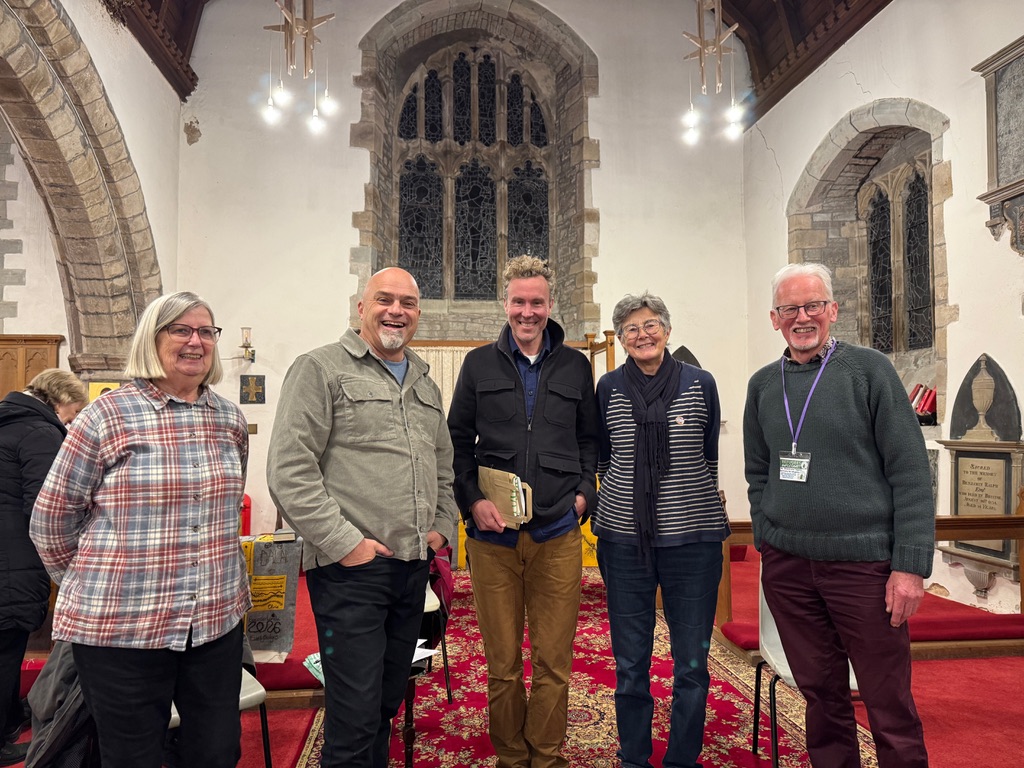
Margaret Blake’s introduction, Ben Rawlence’s reflections on climate change and migration, and Mark Seymour’s account of Newport Sanctuary all contributed to a discussion about our responsibilities towards one another.
The evening reminded us that these challenges cannot be addressed through policy alone. They also require understanding, imagination, empathy and a willingness to recognise our shared humanity.
At the heart of the meeting was a simple but demanding question: when people lose their homes, their security or their sense of belonging, how do we respond — and what does that response say about us? the difference that ordinary people can make through kindness and practical support.
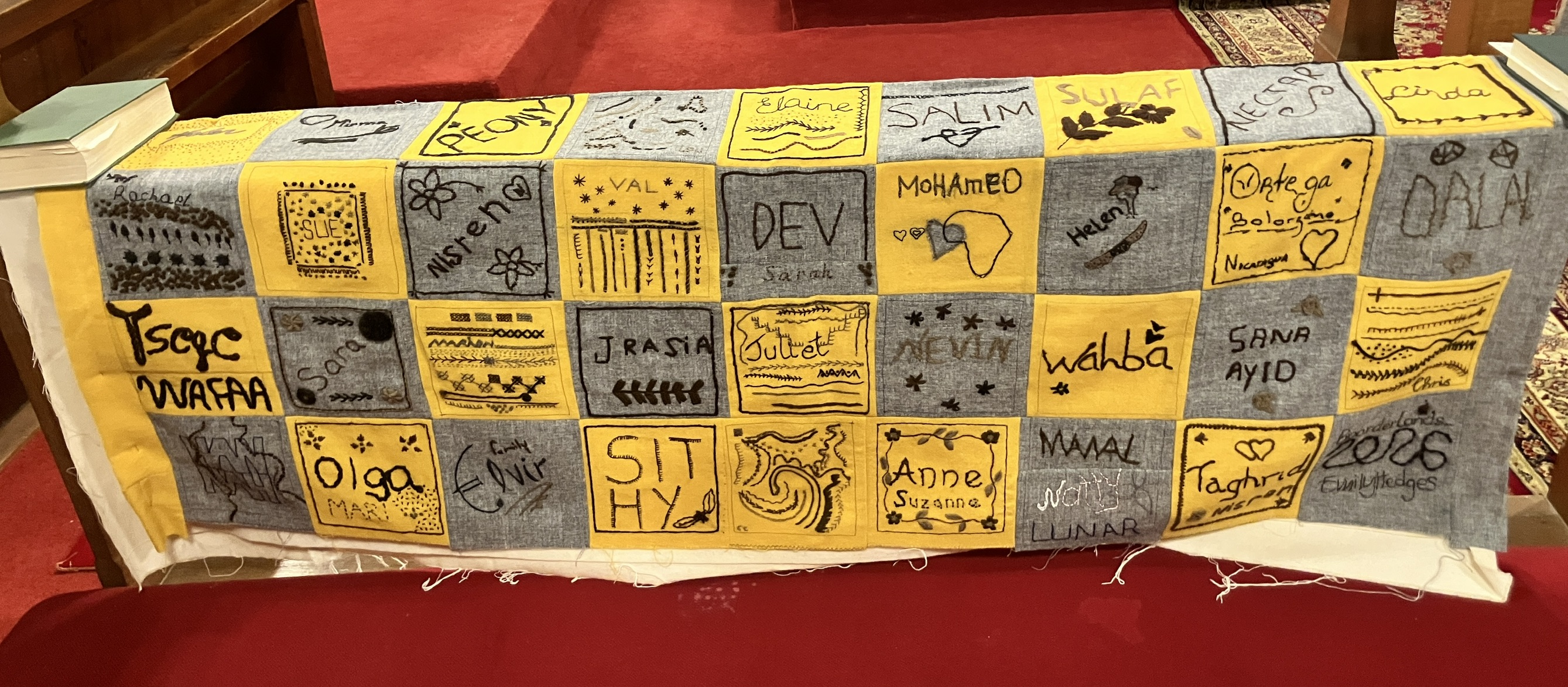
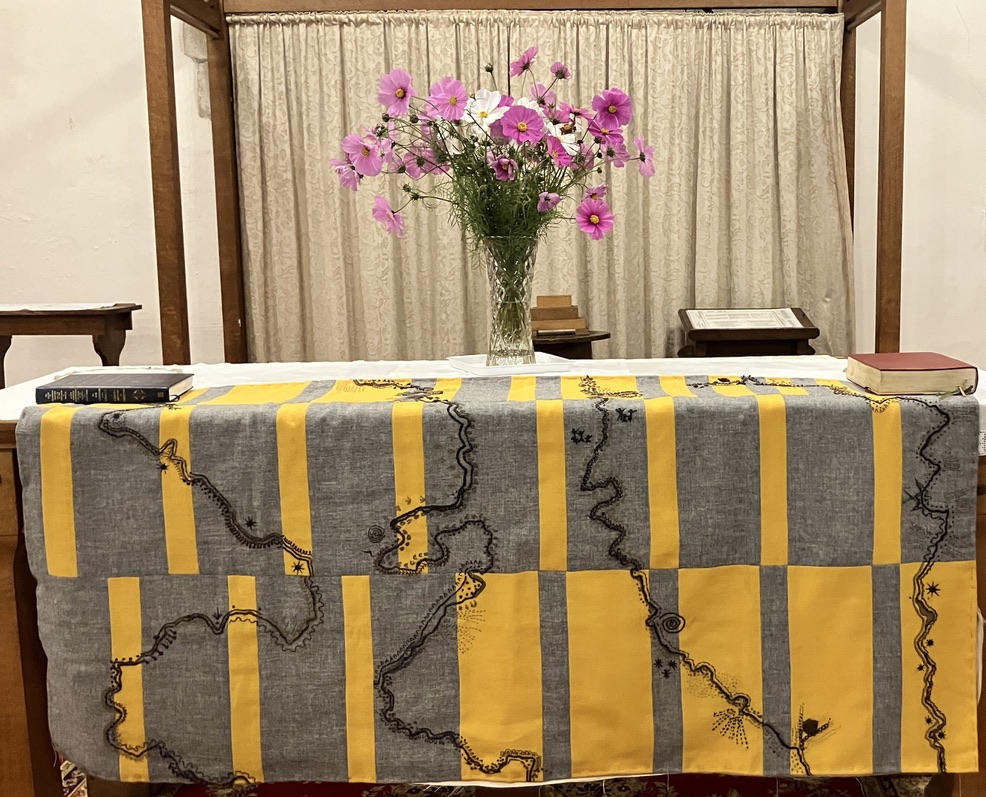
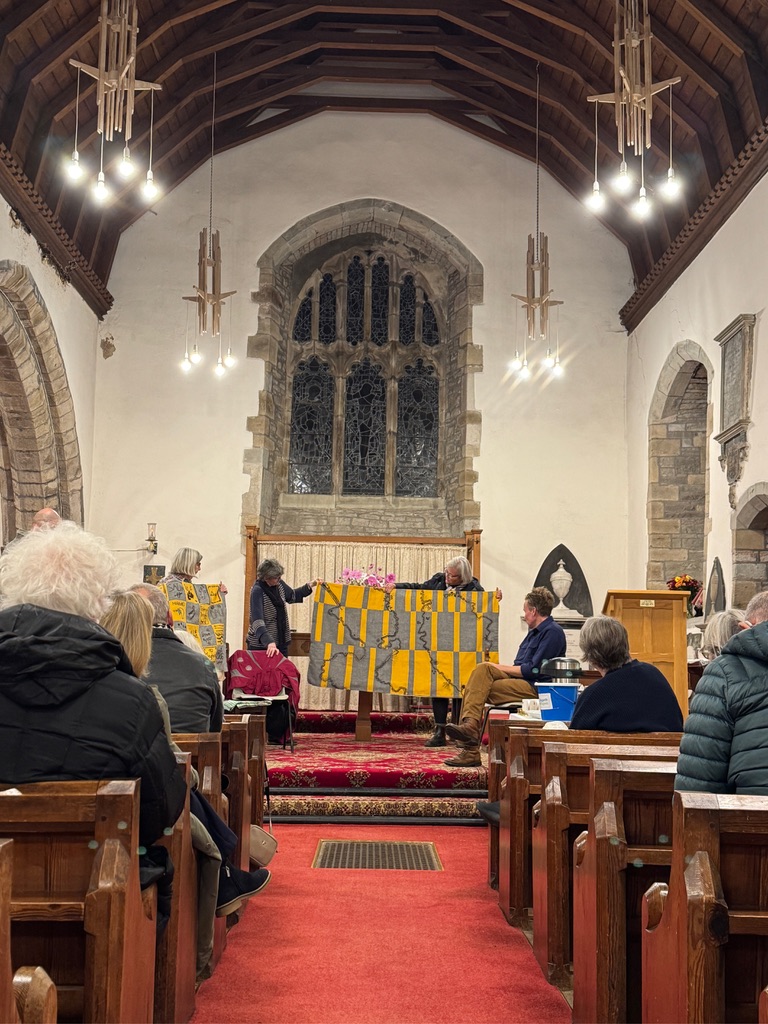
The meeting also gave an opportunity to see the Borderlands Quilt which was made by a group of people seeking sanctuary in Newport together with local stitchers in Hay. The quilt is nearing completion and will be displayed in Hay Castle soon.